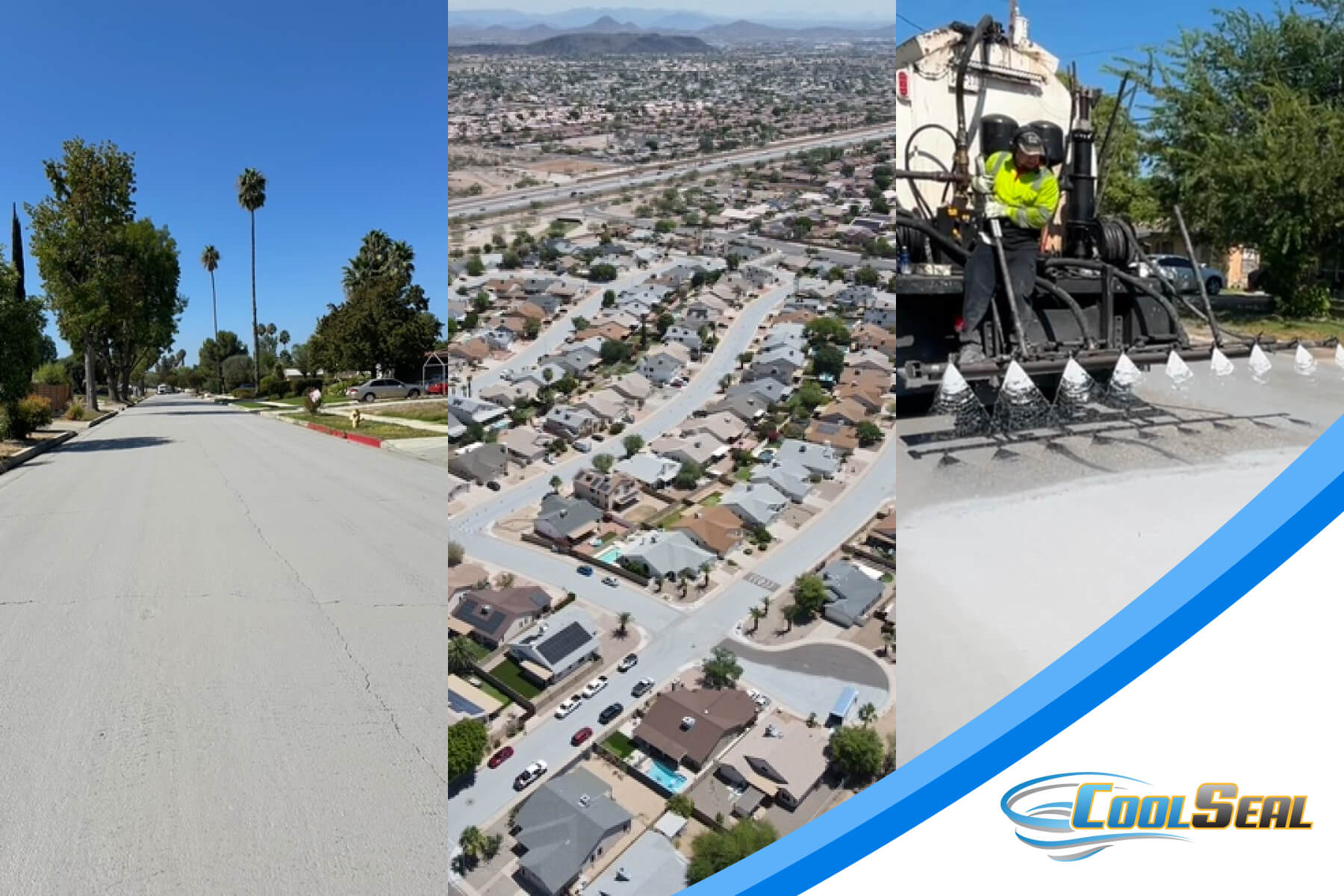
Cities across the U.S. are striving to have cooler, longer lasting streets that help to protect public health, and make communities more liveable. As extreme heat intensifies, the demand for practical, scalable solutions has never been greater. CoolSeal has become one of the most visible tools in that evolving toolkit.
To date, CoolSeal reflective sealcoat has been applied to hundreds of lane miles across 22 states and 6 countries, helping communities reduce urban warming, strengthen infrastructure resilience, and improve daily comfort and health.
In 2025, three cities in particular—Los Angeles, Phoenix, and San Antonio—show how far the industry has come. Together, they offer a compelling narrative of long-term field testing, independent research, and program expansion that is shaping what “effective” looks like for cool pavement deployments around the world.
Los Angeles: Nine Years of Citywide Cooling Across Every Council District
Los Angeles is now in its ninth year of deploying cool pavement citywide, making it one of the longest-running and most comprehensive urban cooling programs in the country. CoolSeal has been a part of this effort since the early phases, supporting installations that now span every council district, with over 175 lane miles treated to date. Beyond cooling benefits, CoolSeal also provides a protective barrier that helps preserve pavement by reducing oxidation and surface wear—an impact reflected in LA’s long-term observations, where treated streets have maintained performance even four years after application. The program has steadily expanded from small-scale demonstrations into a comprehensive, citywide cooling and pavement preservation strategy.
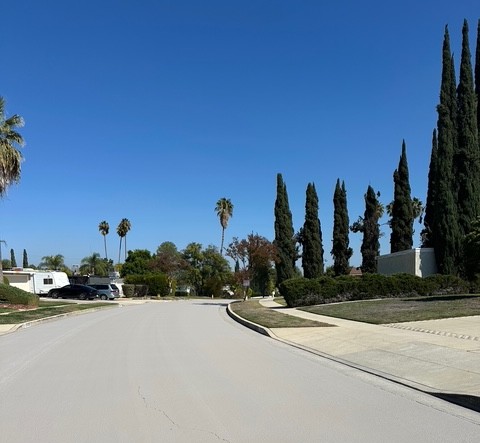
Cool pavement now appears as a designated treatment category, “Cool Pave,” within the city’s official 2025–2030 Pavement Preservation Program, underscoring its role as a standing component of LA’s heat-mitigation and infrastructure planning.
Years of city monitoring and external research continue to show meaningful reductions in pavement surface temperatures on treated streets: surface temperatures on treated streets are frequently 10 °F (or more) lower than on conventional asphalt. Ambient air temperatures in some treated zones have also shown reductions of up to 3.5 °F during extreme heat events, with smaller but measurable cooling on sunny days. Read our case study for a more detailed look at the impact.
Looking Ahead
As Los Angeles evaluates additional neighborhoods and strengthens heat-resilience measures, CoolSeal continues to support high-quality applications. With cool pavement established as a core component in the city’s multi-year infrastructure plan, LA remains one of the leaders in the deployment and advancement of reflective street-cooling strategies.
Phoenix: Advancing the Nation’s Largest Cool Pavement Program in Its Sixth Year
By 2025, Phoenix had solidified its position as one of the largest and most thoroughly studied cool pavement programs in the United States, now entering its sixth year of continuous deployment with CoolSeal. What began in 2020 as a neighborhood-scale pilot has evolved into a multi-phase, research-backed initiative that spans dozens of street segments across the city.
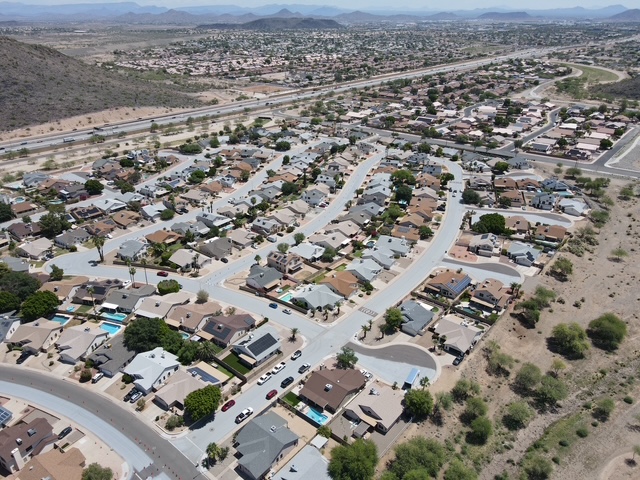
Over multiple program years, Phoenix has applied CoolSeal across hundreds of miles of residential streets, supported by a long-running research partnership with Arizona State University. ASU’s independent evaluations consistently demonstrate:
- Surface temperatures 10–12°F lower on CoolSeal-treated streets
- Lower sub-surface temperatures (an average reduction of 4.8°F) helping reduce thermal stress on asphalt and support longer pavement life
- Reduced late-day heat storage in pavement during extreme heat
- Positive resident feedback on comfort, usability, and neighborhood appearance
In 2025, the city continued deployments under its active cool pavement program, incorporating CoolSeal 2.0, GuardTop’s next-generation formulation designed for enhanced reflectivity and durability. Ongoing evaluations (ranging from mobile heat sensing to stationary monitoring) inform how Phoenix integrates cool pavement into larger heat adaptation efforts, including shade planning and heat vulnerability reduction.
Looking Ahead
Phoenix will continue refining where and how cool pavement delivers the most benefit, strengthening its role in broader climate resilience strategies. As the program grows, CoolSeal remains a central partner, supporting both application precision and long-term performance tracking across the nation’s most ambitious cool pavement initiative.
San Antonio: Rapid Expansion in Its Third Year
San Antonio’s cool pavement program has rapidly transformed in just three years from a small introductory test to one of the fastest-scaling cool pavement efforts in the country. Beginning with 5,000 square feet in its first year, the city has now expanded to over 2 million square feet of cool pavement applied across multiple districts.
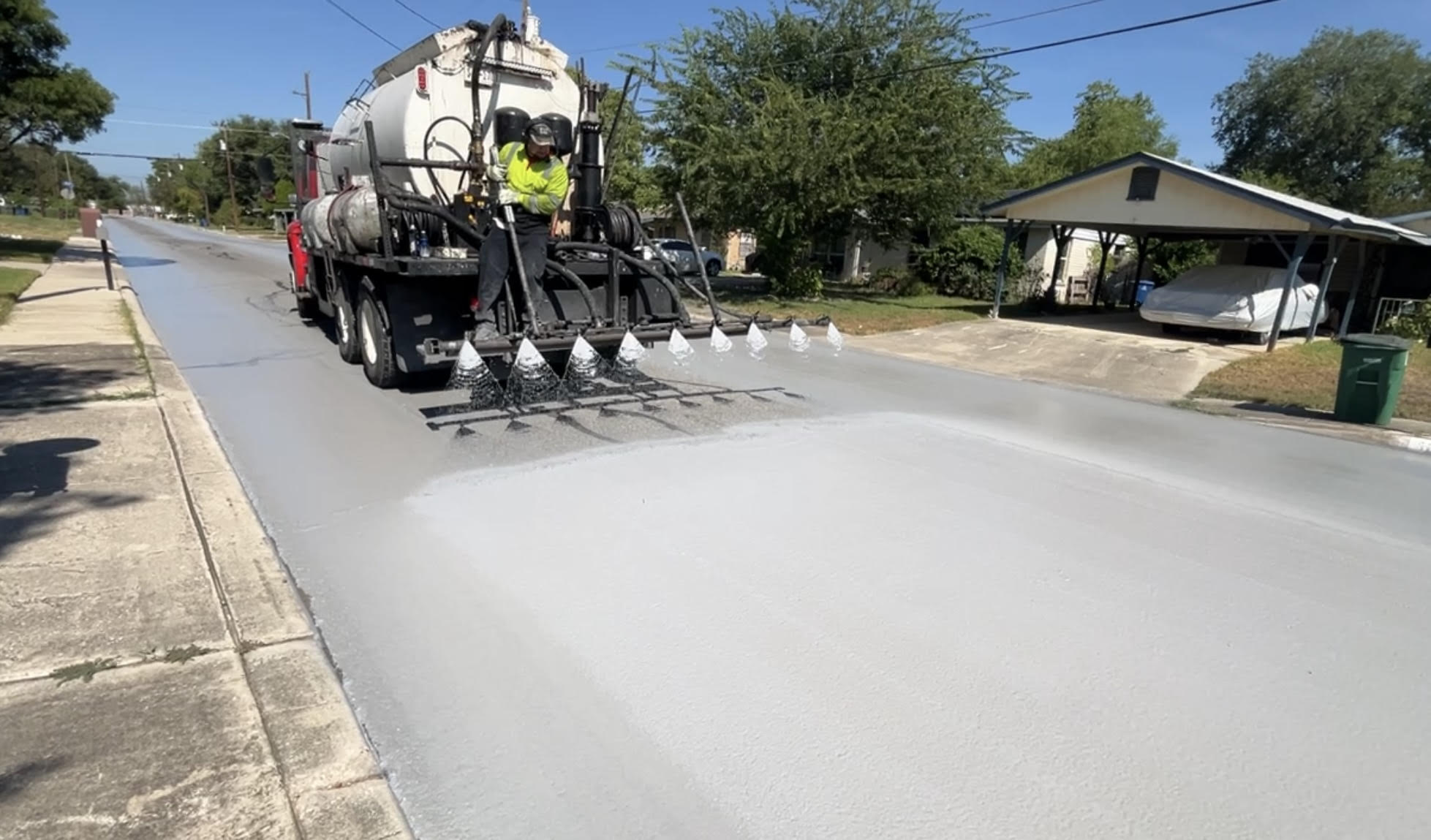
The city’s early installations generated enough interest and momentum to launch a multi-vendor pilot program spanning select test sites in all ten council districts. As one of the first major evaluations in a humid subtropical climate, San Antonio’s results uniquely complement studies from arid cities like Phoenix and Los Angeles.
Findings from both the city’s Cool Pavement Temperature Test Final Report and a 2025 peer-reviewed study has shown:
- Consistent daytime surface temperature reductions on treated streets
Across all monitored sites, treated pavements demonstrated meaningfully lower surface temperatures, often 10–15°F cooler than untreated asphalt during peak sun hours.
- Strong potential where shade is limited
Both studies highlight that reflective pavements can be especially useful in locations where trees or shade structures are not feasible.
In 2025, San Antonio’s third year of pilot activity expanded into new neighborhoods and intensified evaluation, marking a shift from isolated tests toward strategic integration in planning, equity, and climate resilience efforts.
Looking Ahead
San Antonio will continue refining deployment criteria and evaluating long-term material performance as it considers broader program integration. With CoolSeal contributing to foundational installations and ongoing learnings, the city is poised to play a leading role in defining how cool pavement functions in warm, humid climates across the southern United States.
The progress unfolding in Los Angeles, Phoenix, and San Antonio demonstrates how reflective pavement can meaningfully reshape the way cities respond to extreme heat while also protecting and extending the life of the pavement beneath it. CoolSeal is proud to stand alongside communities leading this change—and there is much more ahead. As we move toward 2026, we invite cities and partners to stay connected, explore upcoming projects, and consider how CoolSeal can support your journey toward cooler, more resilient streets.
Contact us or join our upcoming webinars.